

In the high-performance engine world, discussions about forged connecting rods are often simplified into a single question:
Is an I-beam stronger, or is an H-beam more durable?
However, real engine engineering is far more complex than simply choosing a beam shape.
Beam design is only one part of the equation. The real performance of a connecting rod depends on material strength, structural efficiency, weight distribution, and the intended application.
An Interesting Case: CBR1000RR Connecting Rod Weight
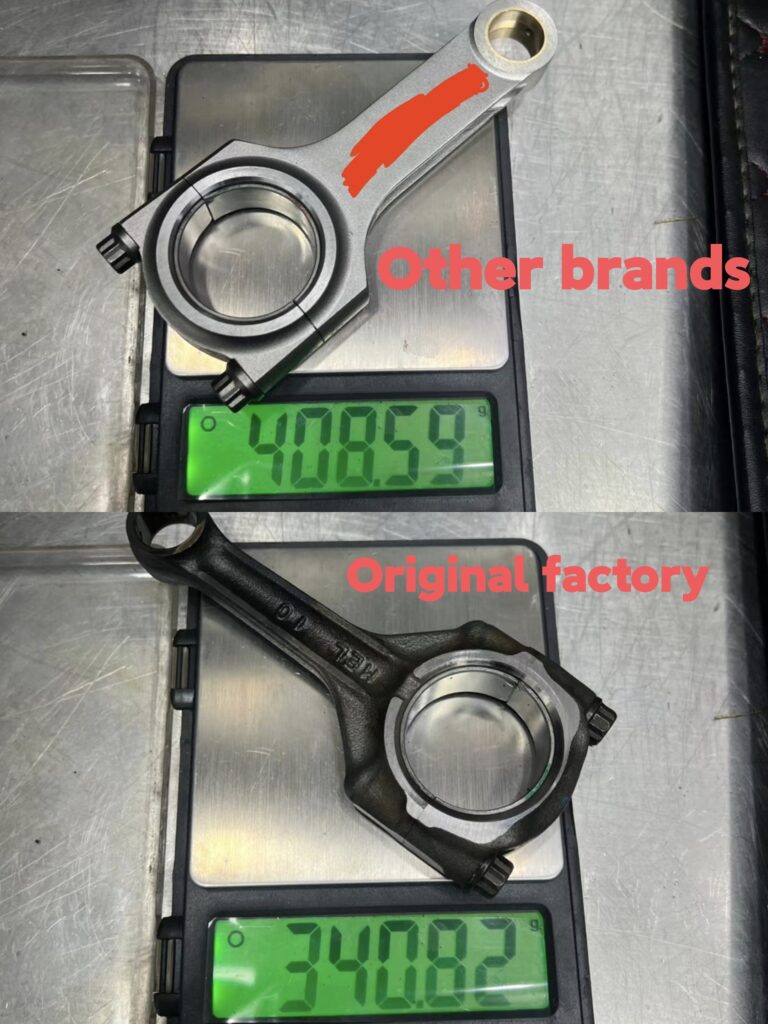
During a discussion with a customer project, we came across an interesting example involving the Honda CBR1000RR.
The OEM connecting rod weighed:
340.82g
An aftermarket forged rod from another brand weighed:
408.59g
Many people might immediately assume:
Heavier means stronger.
But from an engineering perspective, that conclusion is not always correct.
A heavier rod may indicate:
- a larger safety margin
- a durability-focused design
- or lower structural efficiency requiring more material
Weight alone does not determine the overall performance of a connecting rod.
Even Within the Same H-Beam Design, Weight Can Vary Significantly
Looking at another example from a high-end manufacturer reveals something even more interesting.
For example, the CP Carrillo CBR1000RR H-beam connecting rod:
Total weight: 285g
Big End: 220g
Small End: 65g
This means that even with the same H-beam architecture, the rod can actually be lighter than the OEM part.
This highlights an important point:
Beam shape alone does not define the performance of a connecting rod.
Key Factors That Determine Rod Performance
Several engineering factors influence connecting rod performance.
Material
Common materials include:
- 4340 alloy steel
- 300M high-strength steel
- other specialized alloys
Material properties strongly influence fatigue resistance.
Structural Efficiency
Beam geometry, cross-section design, and stress distribution all affect strength-to-weight performance.
Weight Distribution
The balance between big-end and small-end weight affects:
- crankshaft loading
- high-RPM stability
- engine response
Application
Different applications require different design priorities:
- street durability
- sustained high-load operation
- high-RPM racing engines
- drag racing setups
Why Multiple Beam Designs Exist
In the aftermarket industry, several beam structures are commonly used.
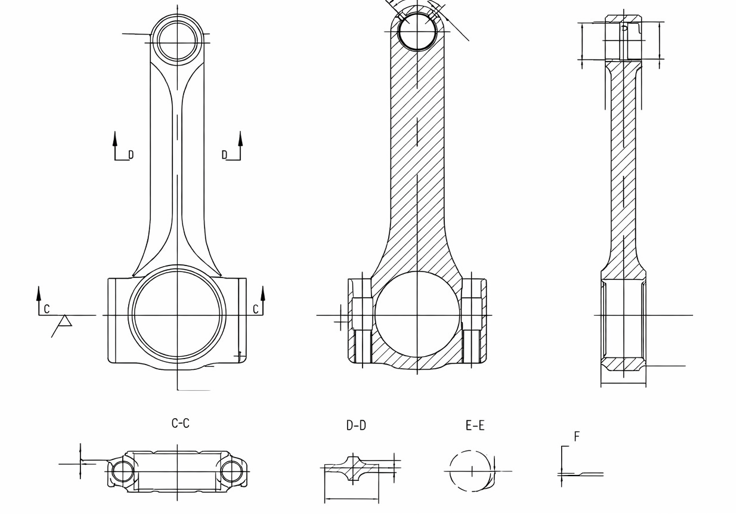
H-Beam
- strong and reliable
- efficient manufacturing
- widely used
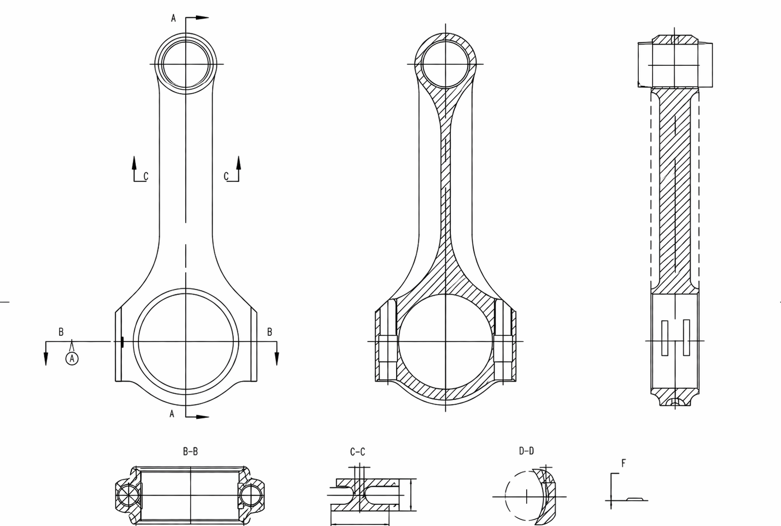
I-Beam
A classic racing structure that remains popular in many high-performance engines.
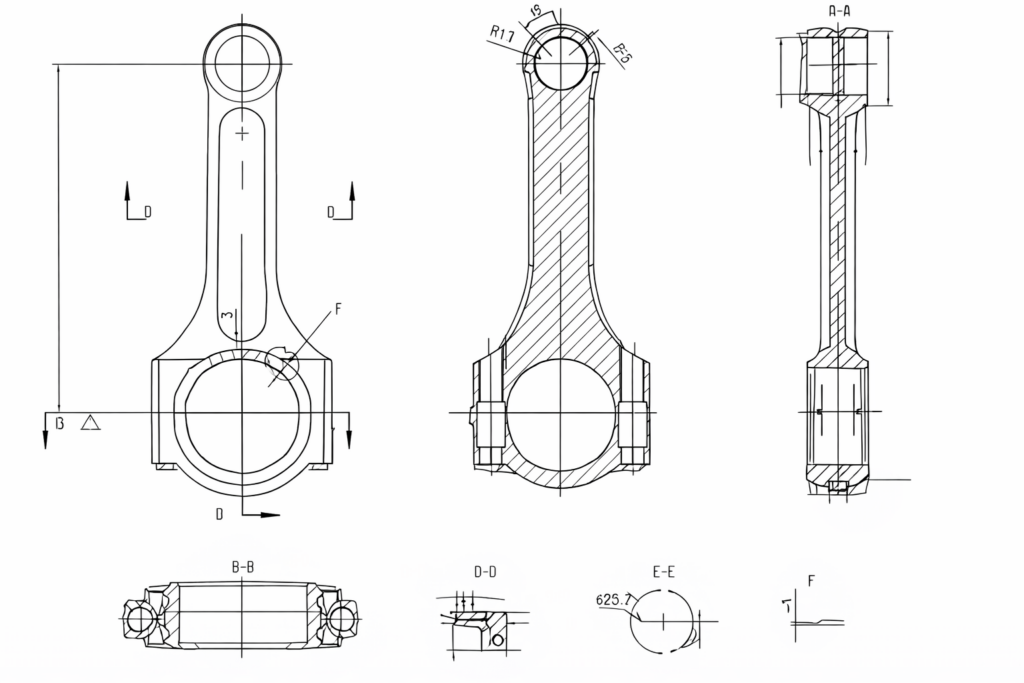
X-Beam
A more modern design approach focusing on:
- structural efficiency
- weight optimization
- improved stress distribution
Due to its machining complexity, X-beam designs are less common but increasingly used in performance applications.
Conclusion
From an engineering perspective, connecting rod design is never simply about choosing between H-beam and I-beam, nor is it about making the rod as light or as heavy as possible.
The best connecting rod is the one designed to match the engine platform, RPM target, and real-world application.
Beam shape is only part of the overall engineering solution.