

In modern scooter tuning culture, performance upgrades usually start with the most visible components:
- CVT systems
- Exhaust upgrades
- ECU tuning
These modifications can significantly improve throttle response and acceleration, which is why they are often the first step for many riders.
However, once engine performance begins to increase further — such as through:
- Higher compression ratios
- Big bore kits
- Higher sustained RPM
- Long-duration high-load riding
the importance of internal engine components starts to become much more apparent.
Among these internal components, the connecting rod often becomes one of the most critical structural parts of the engine.
This is increasingly visible across several popular scooter platforms, including:
- Honda Forza 350 / ADV350
- Yamaha XMAX 300
As modification levels for these platforms continue to grow, discussions around engine internals are becoming more common.
The Honda Forza 350 Engine Platform
The Honda Forza 350 uses Honda’s eSP+ single-cylinder engine, with the following basic specifications:
- Displacement: 329.6 cc
- Bore × Stroke: 77 × 70.8 mm
- Maximum Power: approx. 21.5 kW @ 7500 rpm
- Maximum Torque: approx. 31.5 Nm @ 5250 rpm
This engine platform is designed primarily for:
- Smooth operation
- Reliability
- Long service life
For daily commuting, this design philosophy works extremely well.
However, when the engine is pushed into higher performance territory — such as:
- increased compression ratios
- larger displacement kits
- higher sustained RPM
the internal components begin to experience significantly higher mechanical loads.
Why the Connecting Rod Is Critical in High-RPM Engines
Many people assume the piston is the most important internal component of the engine. While pistons are certainly important, from an engineering perspective the connecting rod actually experiences some of the most complex loads in the entire engine.
The connecting rod links the piston to the crankshaft and converts combustion force into rotational motion.
During operation, the rod must handle two primary types of loads.
Combustion Load
When combustion occurs inside the cylinder, the piston is forced downward. The connecting rod transmits this force to the crankshaft.
Inertial Load
At higher engine speeds, the piston must rapidly change direction at top dead center. At high RPM, the inertia forces generated by the piston become extremely large.
As a result, the connecting rod continuously experiences alternating compression and tension loads.
In many high-performance engines, the connecting rod becomes one of the first components to approach its structural limits.
Rod Ratio and Piston Side Load
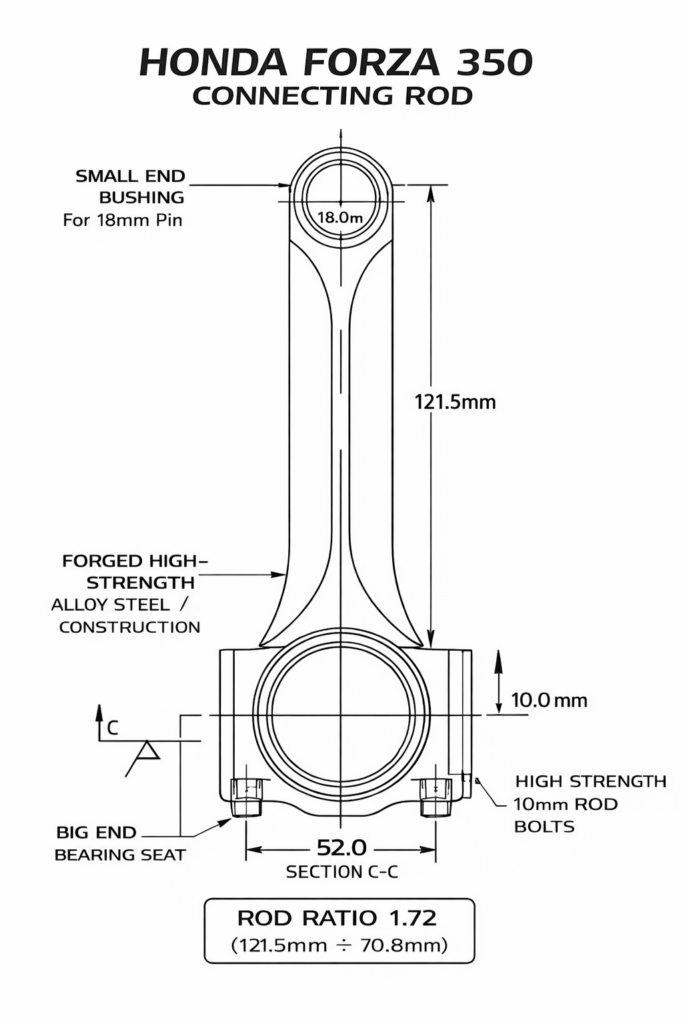
Another important concept in engine design is the rod ratio.
Rod Ratio = Rod Length ÷ Stroke
For the Honda Forza 350 engine:
121.5 mm ÷ 70.8 mm ≈ 1.72
This value falls within a healthy range for single-cylinder engines.
Rod ratio influences piston movement characteristics.
Shorter rods tend to produce:
- Higher piston side loads
- Stronger low-RPM torque response
Longer rods tend to provide:
- Lower piston side loads
- Improved high-RPM stability
Because the connecting rod operates at an angle relative to the crankshaft, it also generates a lateral force that pushes the piston against the cylinder wall.
This force is called:
Piston Side Load
Side load can influence several factors inside the engine, including:
- piston skirt wear
- cylinder wall friction
- overall engine temperature
Managing piston side load effectively is an important part of engine design.
Why Most Performance Rods Maintain OEM Geometry
Many aftermarket forged connecting rods retain the original OEM geometry, including:
- OEM center-to-center length
- OEM piston pin diameter
- OEM big-end dimensions
The main reason for this approach is straightforward:
It allows the rod to function as a direct replacement upgrade.
If the rod length or pin size were changed, it would often require additional modifications such as:
- different piston compression height
- changes in compression ratio
- possible crankshaft balance adjustments
For this reason, most performance rods follow a simple philosophy:
retain the original geometry, but strengthen the materials and structural design.
This type of product is commonly referred to as an OEM replacement performance upgrade.
Common Connecting Rod Beam Designs
In the aftermarket performance industry, several beam designs are commonly used.
H-Beam
Advantages include:
- High structural strength
- Efficient manufacturing
- Reasonable production cost
Because of this balance, H-beam rods are widely used in many performance applications.
I-Beam
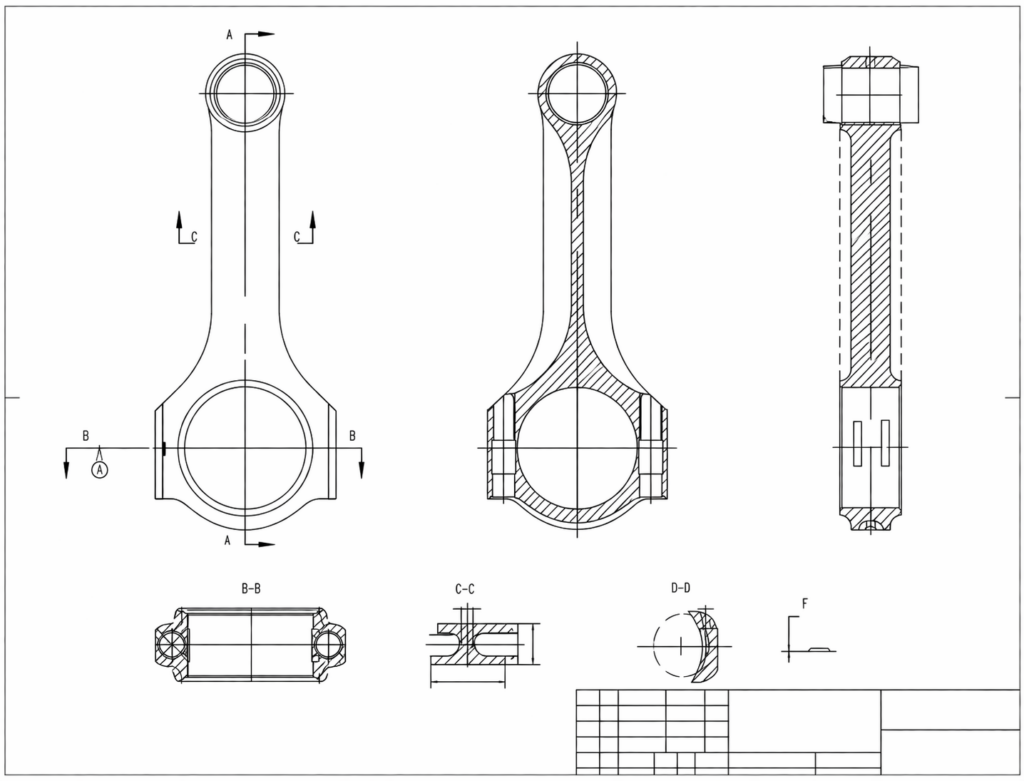
The I-beam design is a classic structure that has been used in many racing engines.
It offers a relatively lightweight structure while maintaining good strength characteristics.
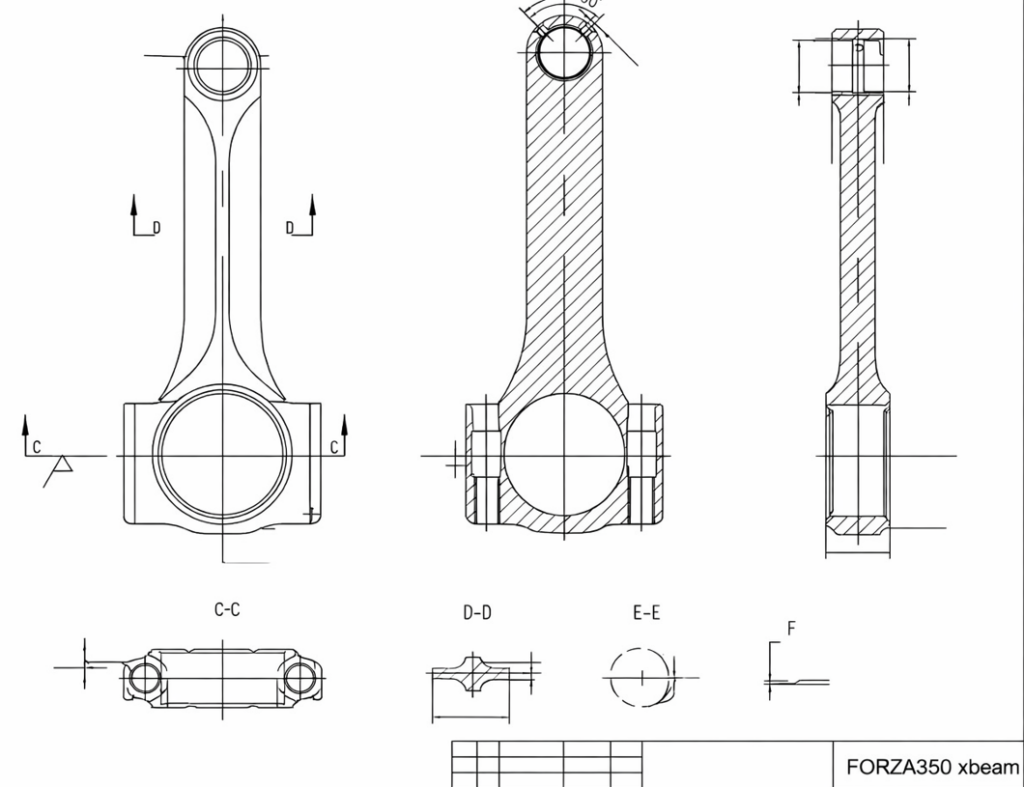
X-Beam
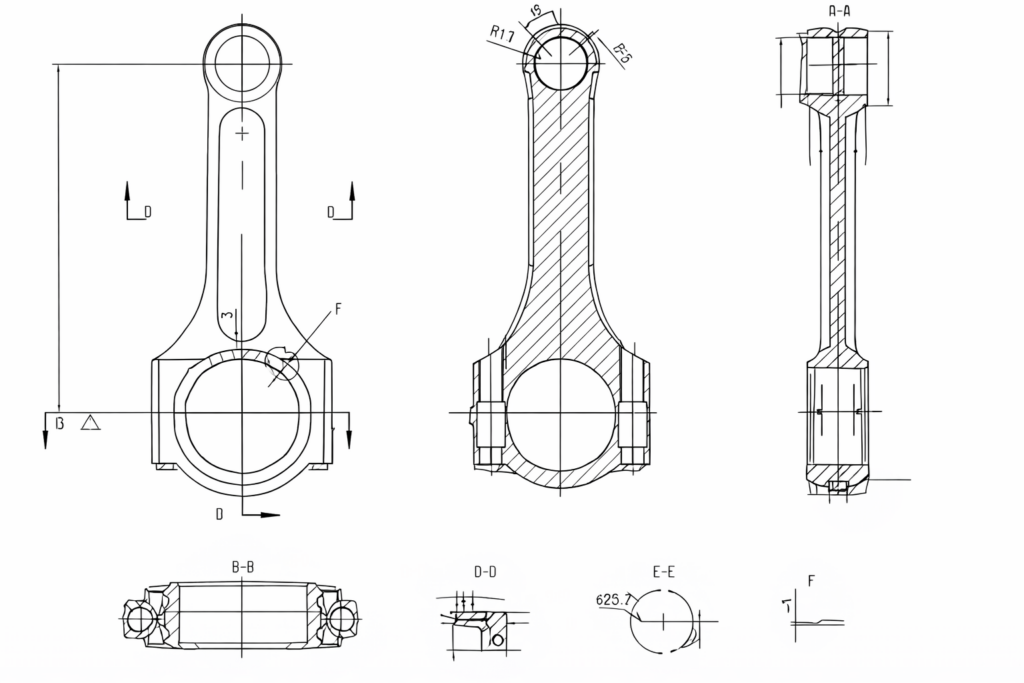
X-beam rods represent a more modern design approach.
They typically feature:
- improved material distribution
- optimized stiffness-to-weight efficiency
- potential weight reduction
Due to higher machining complexity, X-beam rods are less common in the market but are gradually appearing in some high-performance applications.
Observations from Developing Scooter Engine Components
From our experience developing forged engine components at JAModified, we have observed an interesting pattern in many scooter performance builds.
Most builds initially focus on external upgrades such as:
- CVT systems
- exhaust systems
- ECU tuning
However, once performance levels increase and engines begin operating under higher stress conditions, builders often start paying attention to internal engine components.
These typically include:
- pistons
- connecting rods
- crankshafts
This is especially true in builds intended for:
- racing applications
- drag setups
- high-compression performance engines
In these cases, internal component durability becomes increasingly important.
Conclusion
As high-performance scooter culture continues to grow, engine internals are gradually becoming a more important topic among builders and enthusiasts.
While CVT systems and exhaust upgrades remain the most common modifications, internal components such as connecting rods play a critical role in maintaining reliability under higher stress conditions.
Understanding these fundamental engine principles can help riders and builders make more informed decisions when planning performance upgrades.