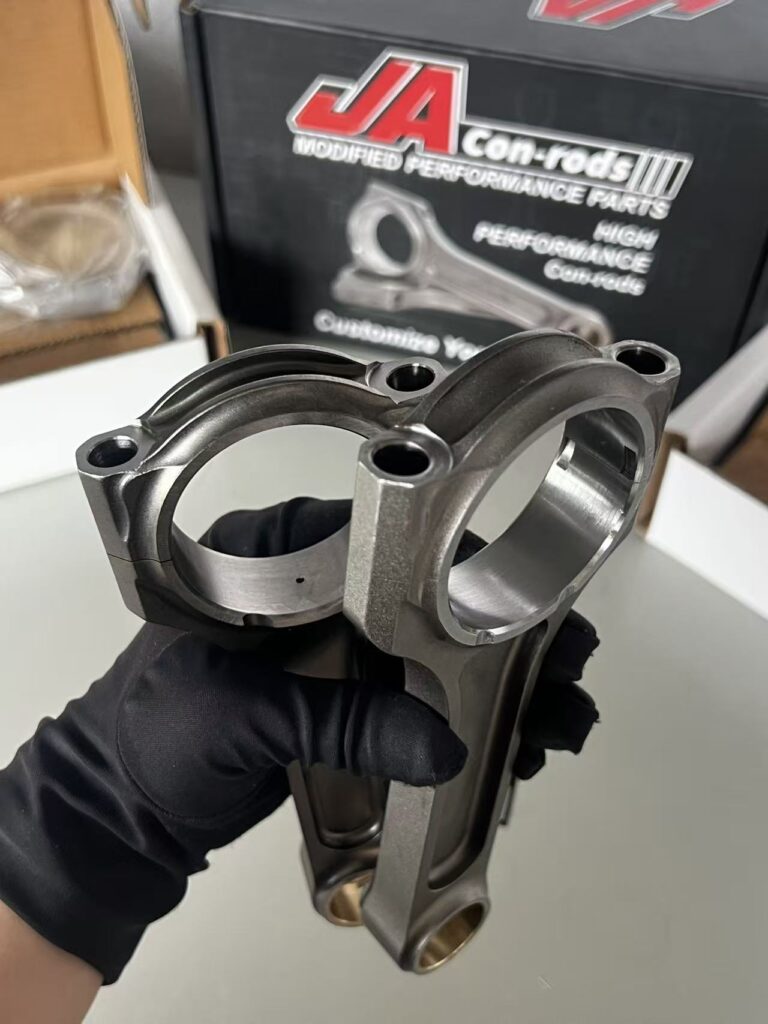

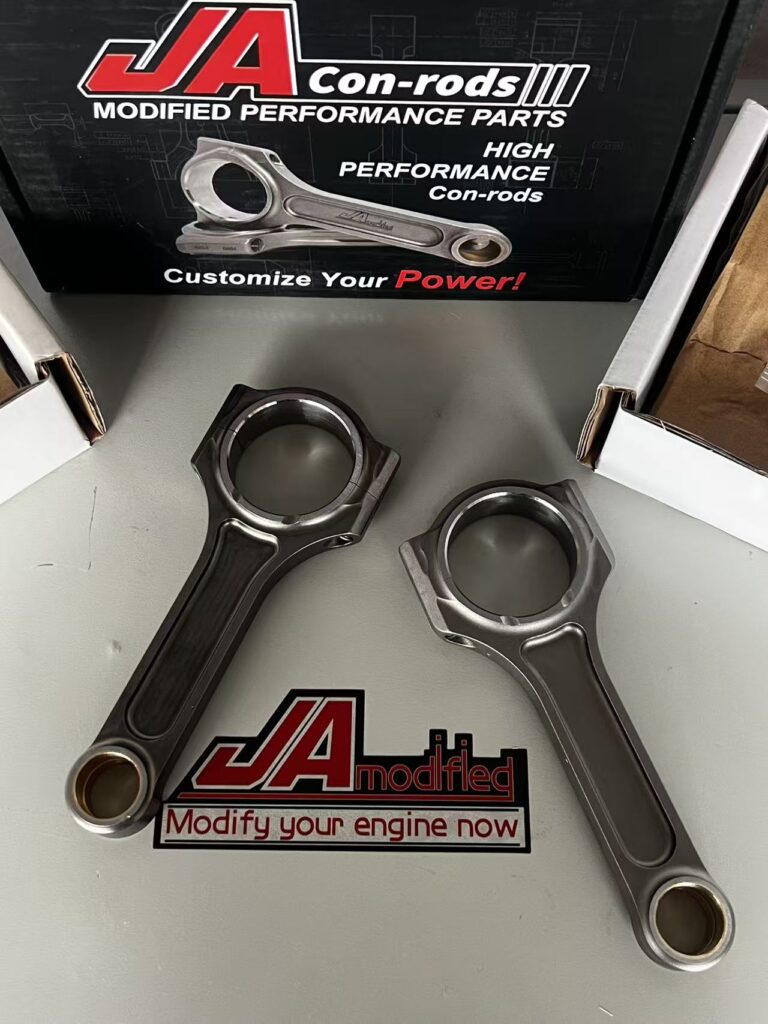
When people compare connecting rods, they usually focus on three things first:
- appearance
- weight
- price
But if the decision is based only on those surface-level factors, the real engineering logic can easily be missed.
For a forged rod, the real question is not:
“Which one is lighter?”
And not simply:
“Which one is more expensive?”
The real question is:
“What kind of build logic was this rod actually designed for?”
For many strong street builds, 4340 rods remain a very mature, reliable, and rational choice.
They offer a long-proven balance of strength, durability, and cost.
But once the build becomes more serious, the priorities start to change.
That is where 300M rods begin to justify themselves more clearly.
They are usually more relevant for builds that demand:
- more fatigue margin
- more toughness
- more long-term safety margin
- more durability under repeated hard use
Why do they look different?
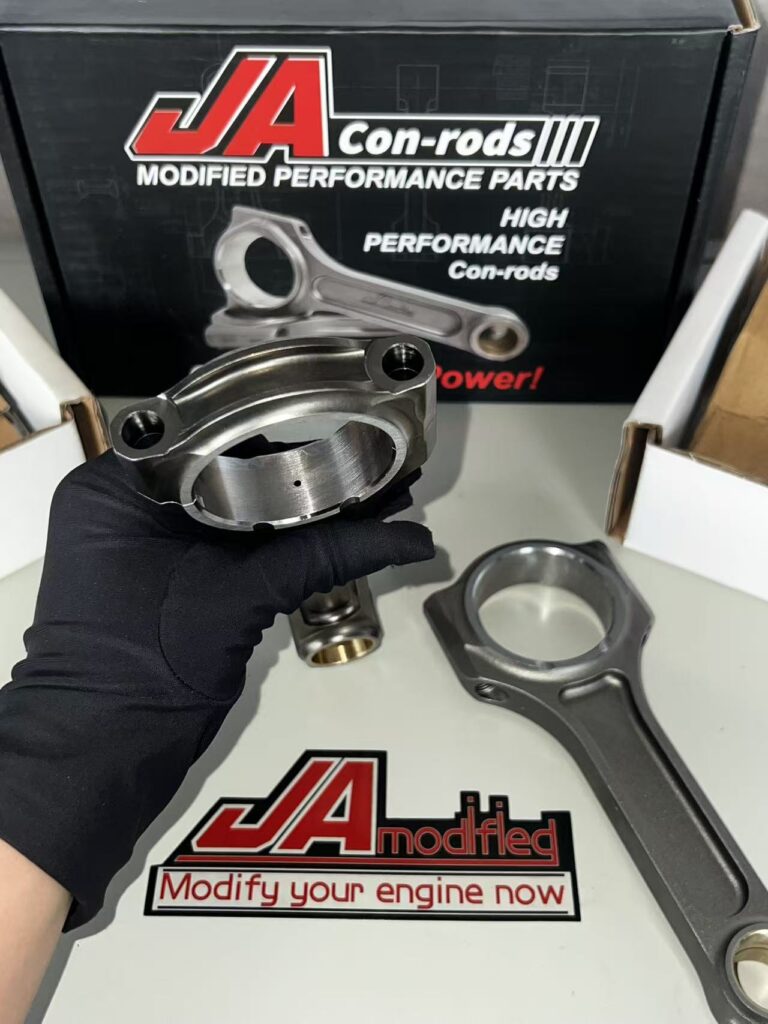
A lot of people first notice the visual difference between a 300M rod and a 4340 rod.
But what really matters is this:
A difference in appearance often reflects a difference in engineering priority.
Beam shape, big-end transition, pin-end area, local reinforcement, weight reduction strategy, and oiling details all exist to serve a design target.
So if one rod looks thicker or more complex, that does not automatically make it better.
At the same time, a rod that looks cleaner or lighter is not automatically better for every application either.
Why is the 300M rod heavier?
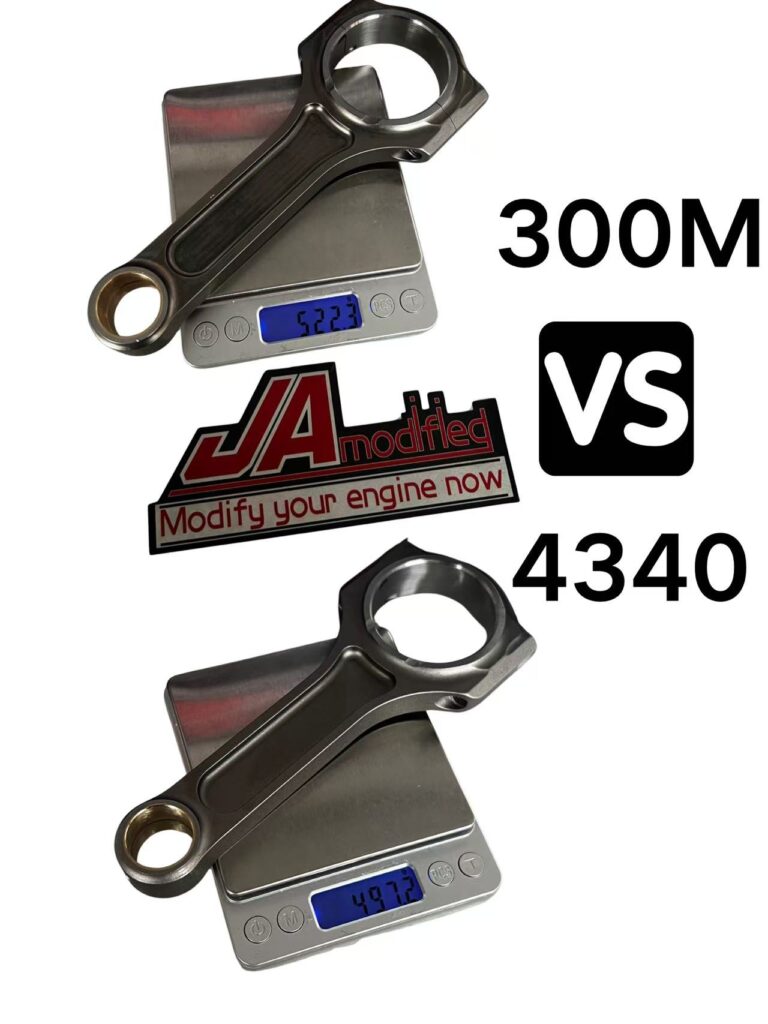
This is one of the most misunderstood points.
A lot of people instinctively think:
“Lighter means better.”
But in a serious build, that logic is incomplete.
Lightweight design absolutely has value.
A lighter reciprocating assembly usually helps the engine accelerate more freely and respond more quickly.
But rod design is never only about making the part as light as possible.
In higher-load, higher-boost, harder-use conditions, engineers may accept additional weight in exchange for:
- more strength margin
- more rigidity
- better long-term fatigue life
- a higher safety boundary
So:
Heavier does not automatically mean worse.
Sometimes it simply reflects a different design priority.
What does the deeper oiling hole do?
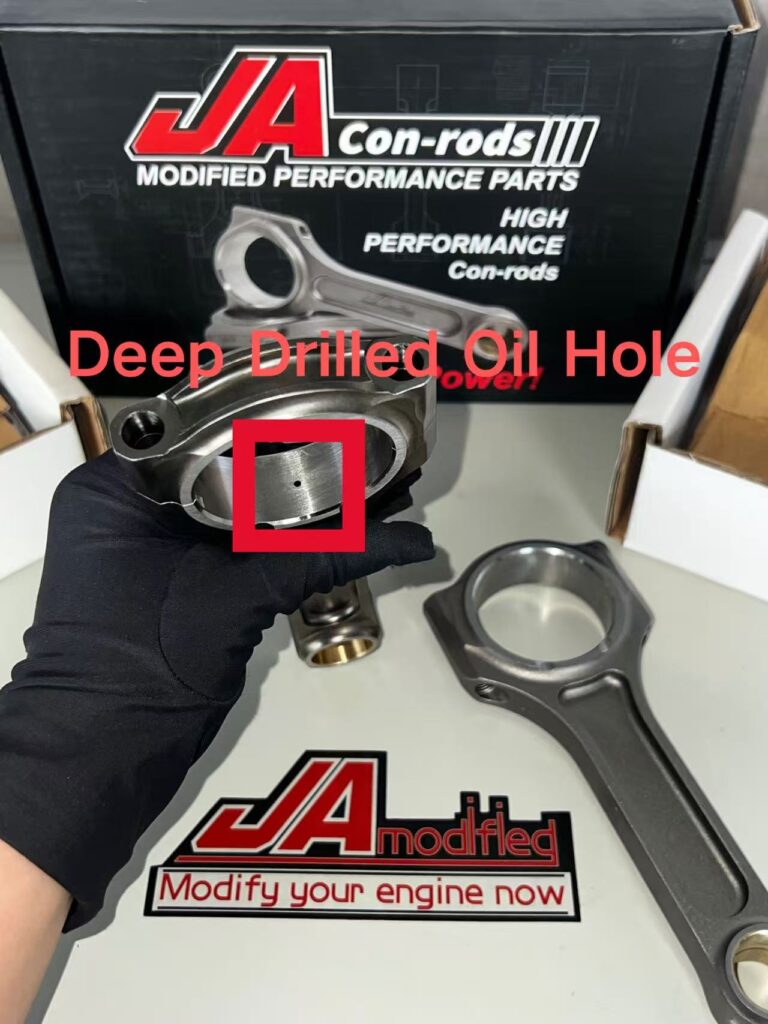
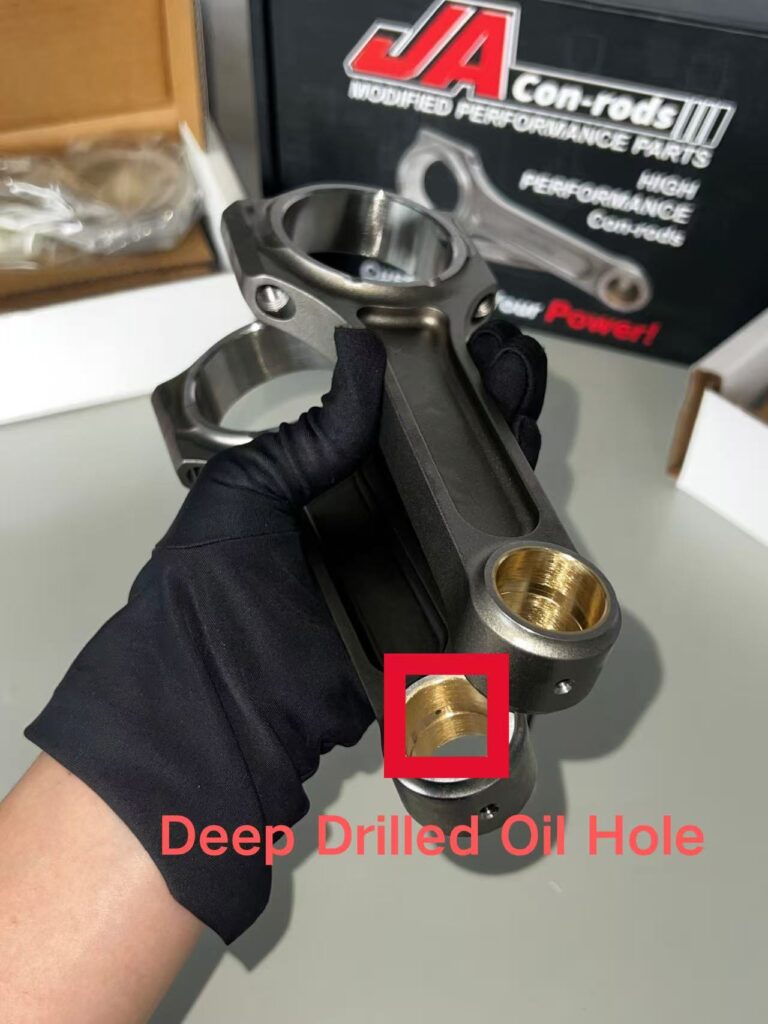
If a 300M rod uses a deeper oiling feature around the small-end or related area, its purpose is usually not cosmetic.
The point is lubrication.
Especially under higher load, higher rpm, and longer hard-use conditions, lubrication around the pin-end area becomes a detail that matters.
So the practical meaning of this design can be understood as:
making the rod more lubrication-friendly in more serious operating conditions.
It is not the only thing that determines rod quality,
but it is a meaningful detail in a more serious rod design.
Why is 300M more expensive?
A lot of people reduce the price difference to one idea:
“The material is just more expensive.”
But the more complete answer is this:
300M rods are usually more expensive not only because the material is different,
but because several factors are layered together:
1. Higher-grade material route
300M itself is a more premium material route, usually chosen when more fatigue margin and toughness are expected.
2. Different design target
If the rod is intended for a more serious build, its structure, safety margin, and detail priorities will naturally be different.
3. More serious manufacturing and QC expectations
The cost of a higher-grade rod is not only in the steel.
It is also in:
- forging quality
- heat treatment
- machining precision
- weight matching consistency
- final QC standards
So the better way to say it is:
300M is not only more expensive because of the raw material.
It is more expensive because material route, design target, and manufacturing standard together define a higher product tier.
The real selection logic
So the difference between 300M and 4340 should not be simplified into:
“One is premium, the other is low-end.”
A more accurate way to understand it is:
- 4340: a strong and rational choice for many proven street and strong-street builds
- 300M: a more serious option for builds that demand more long-term margin under harder use
For platforms like EA888 and EA855, the right answer is not to blindly chase the lightest option, and not to blindly chase the most expensive one either.
The real question is:
Does this rod actually match the goal of the build?